


CDL Practice Written Test
4.6401.00 Reviews
App Specs
- Version
- 2.2.4
- Updated On
- License
- Free
- Downloads
- 100,000+
- Developer
- DMV Written Test
- Categories
- Education
- Platform
- Android
Screenshots
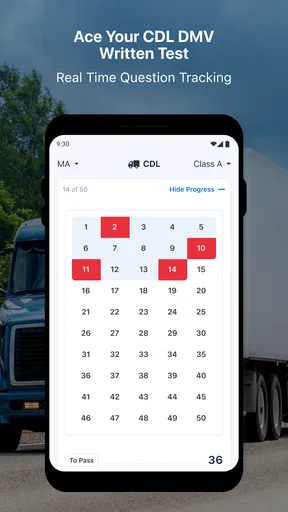
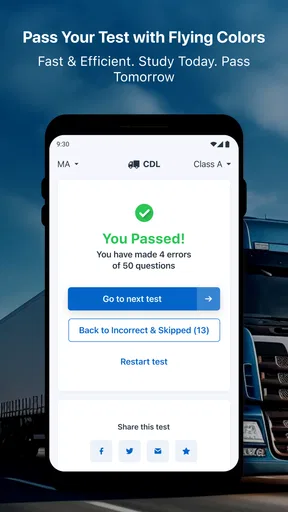
 Analysis by AppCompare
Preparing for a commercial driver’s license is different from casually reviewing road signs before a regular driving exam. The material is broader, the wording can be more technical, and a missed topic may point to a real gap in your preparation. I spent time with CDL Practice Written Test to see whether it could make that process easier, especially when studying from a phone rather than sitting with a manual. My overall impression is that it works best as a focused practice companion: useful for checking what I remember, exposing weak areas, and turning short spare moments into study time.
This is an education app from DMV Written Test, and its purpose is clear from the first use: help learners work through written-test practice for commercial driving. It is free, aimed at Everyone, and currently available as version 2.2.4 for devices running Android 6.0 or later. The app has reached over one hundred thousand installs and holds a 4.6 average from around four thousand ratings, which suggests that many learners find the format practical. Those figures do not replace my own experience, but they do fit the app’s straightforward, exam-oriented design.
How the practice experience fits into real study time
I use short practice sessions as a bridge between reading and exam preparation, not as a substitute for either. The useful question is what I do with an uncertain answer afterward: a quick note can turn a missed item into a focused handbook review, and that handoff is where practice becomes real learning.
A useful first step before opening the official manual
I would not treat this app as a replacement for the official handbook issued by your licensing authority. A practice app is better at testing recognition and recall than at teaching every rule in depth. That distinction matters with CDL preparation because the correct answer is only half the job; you also need to understand why it is correct and whether a rule applies to your state, license class, or endorsement.
Where the app earns its place is in the gap between reading and exam readiness. After studying a section in the handbook, I can use practice questions to find out whether the information actually stayed with me. If I repeatedly hesitate over a subject, that is a signal to return to the source material instead of simply memorizing the answer pattern. This makes the app more valuable as a diagnostic tool than as a standalone course.
The short description, “CDL Practice Test,” is simple, but that simplicity is appropriate. I do not open it expecting video lessons, a driving simulator, or an instructor-led curriculum. I open it when I want written-test rehearsal. That narrow purpose keeps the experience easy to understand, although it may feel limited to learners who want a complete study system in one place.
Why the phone format works for CDL preparation
Commercial driving students often have irregular schedules. Someone may be waiting for a training session, sitting in a parked vehicle before work, or taking a break between errands. A phone-based question session fits those moments better than carrying a full manual everywhere. I found that the app’s greatest practical strength is not any single question; it is the low effort required to begin another short review.
Worth Reading Before You Choose

EA SPORTS FC Mobile 26 Is a Bigger Football Game, but It Takes Time

Flipboard Shows What News Apps Must Do Beyond the Feed

Switching to Android Auto Means Rethinking Your Driving Routine

Google Calendar Makes a Crowded Week Easier to Manage

Ludo King Makes the Most of the Minutes Between Plans

Baby Panda World Brings Quick Play to Modern Phones, but Its Game Library Feels Busy
A realistic routine would be to spend ten minutes on practice questions after breakfast, note the subjects that caused hesitation, and then read those subjects in the official handbook later. On another day, the learner could repeat the process before a classroom session. This two-stage workflow is more reliable than taking test after test without reviewing mistakes. The app supplies the active recall; the handbook supplies the explanation and official context.
There is also a psychological benefit to short sessions. CDL material can become tiring when approached as one large block. A few questions feel manageable, so I am less likely to postpone studying altogether. However, short sessions should not become an excuse to avoid longer review. Before the actual exam, I would still set aside uninterrupted time to work through every relevant topic carefully.
What I would check before trusting an answer
State-specific preparation deserves special attention. Commercial licensing requirements can vary by jurisdiction, and the same broad subject may be expressed differently depending on the state or endorsement. I would use the app to identify concepts that need practice, then compare important answers with the current official material for my licensing authority. That is especially important for learners preparing for passenger, school bus, hazardous materials, air brakes, or combination-vehicle knowledge tests.
This is not a criticism unique to this app; it is a general risk with compact test-preparation tools. A question can be useful for recall while still requiring confirmation in the official handbook. My practical rule is simple: use a practice result as a study signal, not as legal authority. If an answer conflicts with the handbook, the handbook and the licensing office should guide the final decision.
How connectivity changes the experience
The network question is easy to overlook with an app that appears simple. In actual use, the experience depends on what is available when the app is opened and how the device handles its connection. I would begin a session while connected rather than assume that every part of the app will remain available in a dead zone. That habit avoids discovering a limitation when I am already relying on the app for last-minute study.
This matters for learners who travel between training centers, rural areas, truck stops, and busy urban locations. A stable connection makes starting and continuing a session less stressful. A weak connection can turn a quick review into repeated waiting or interruptions, depending on what the app needs at that moment. Since I would not plan an important study block around uncertain reception, I prefer to treat connectivity as part of the preparation routine rather than an afterthought.
The safest approach is to test the app in the places where you expect to study. Open it at home, at the training site, and during a normal commute only when safely parked. If a session works smoothly in those locations, you will know where it fits best. If it does not, keep the official handbook available as the dependable fallback instead of assuming the phone will always be ready.
Using it without wasting mobile data
For a question-and-answer study tool, I would avoid spending cellular data unnecessarily. The most sensible pattern is to launch and use it on a trusted Wi-Fi connection whenever possible, especially before a long trip or a concentrated study session. This is less about the size of any single question and more about avoiding surprises from repeated loading, updates, or other app activity.
I would also avoid repeatedly opening the app just to check whether new material has appeared. A planned session is more efficient than constant background checking. If your mobile plan is tight, study at home or at a training facility with Wi-Fi, then use the phone only for short, deliberate reviews elsewhere. That approach also helps preserve battery, which can matter when the device is needed for navigation, work calls, or emergency contact.
Connectivity can affect concentration as well as data usage. When a learner is waiting for content to load, it is tempting to abandon the session. A simple routine helps: connect first, start a defined block of questions, and stop after reviewing the errors rather than endlessly tapping through tests. The goal is better recall, not the largest possible question count.
What happens when a session is interrupted
Mobile study rarely happens in perfect conditions. A call may arrive, the screen may lock, reception may disappear, or the phone may run low on power. I recommend treating every practice block as a small independent unit. Before leaving a session, remember which subject caused difficulty or write it down. That way, an interruption does not erase the value of the work already completed.
If the app stops responding or cannot continue because of a connection problem, I would close it, restore a reliable connection, and reopen it rather than repeatedly tapping the same control. After recovery, I would check whether the current session resumed as expected before assuming that every answer was recorded. This is a small but important habit: it prevents a technical interruption from being mistaken for a study result.
Keeping a separate note of troublesome topics is one of the most useful workarounds. For example, I might record “air brakes,” “vehicle inspection,” or “combination vehicles” after a difficult session, then study those subjects from the official materials. The note remains useful even if the app is temporarily unavailable, and it turns a vague feeling of uncertainty into a concrete review plan.
Where it beats paper and where paper wins
Compared with a printed question book, the app is more convenient for spontaneous practice. The phone is already with me, and I can test myself without carrying another item. It also makes repeated recall feel less formal, which helps when I have only a few minutes. For learners who dislike writing in books, digital practice is a comfortable alternative.
Paper still has important advantages. A handbook is easier to annotate, compare across sections, and consult when an answer needs deeper explanation. It is also a dependable backup when the phone battery is low or the network is unreliable. I would not choose between the two as if only one could be useful. The strongest setup is the app for retrieval practice and the official printed or digital handbook for authoritative study.
Compared with broad driving quiz apps, this one is more relevant if the goal is a commercial license rather than a standard passenger-vehicle test. That focus reduces distraction. On the other hand, learners who need classroom instruction, detailed diagrams, or a structured calendar may prefer a dedicated course or instructor. The app is efficient for practice, but it does not remove the need for guided learning when the subject is unfamiliar.
Who will benefit most from it
I think CDL Practice Written Test is a good match for three kinds of learners. First are beginners who have started reading the handbook and want a quick way to discover weak subjects. Second are students in a training program who need extra repetition between lessons. Third are experienced drivers returning to written-test preparation after time away, when recall is rusty but the basic concepts are familiar.
It is particularly useful for people who study in short bursts. If you can consistently give the app focused attention instead of tapping through answers while distracted, it can build a helpful rhythm. It is also suitable for learners who want a free starting point before deciding whether they need paid instruction or additional reference material. The absence of a purchase barrier makes experimentation easy.
I would be more cautious about recommending it to someone who has not yet learned the underlying material at all. Guessing through practice questions can create false confidence, especially when the same wording appears repeatedly. A learner who struggles to understand the rules should begin with the handbook, an instructor, or a structured course, then use the app to reinforce that foundation.
Who should choose something else
This may not be the right primary tool for a person who needs comprehensive, state-specific teaching in one package. If your preparation depends on detailed explanations, instructor feedback, accessibility features, or a clearly organized lesson path, look for a resource built around those needs. A question app can show that an answer is wrong without fully teaching the reasoning behind it.
I would also skip relying on it alone if the exam is close and several major subjects remain unfamiliar. In that situation, repeated quizzes may feel productive while leaving important gaps untouched. The better choice is to combine it with official reading and, if necessary, professional instruction. The app is strongest when it supports a plan, not when it becomes the entire plan.
My practical routine for using the app
My preferred workflow begins with a short baseline session. I answer naturally, without looking up every question, and mark the topics that produce hesitation or mistakes. I then stop instead of immediately chasing a higher result. The purpose of that first session is to map the weak points, not to prove that I already know everything.
Next, I read the matching sections in the official handbook. I pay attention to exceptions, definitions, and state-specific wording rather than memorizing a sentence from the quiz. After that review, I return to the app and test the same general subjects again. If performance improves only when the wording looks familiar, I know I need more understanding rather than more repetition.
Before the exam, I would use the app for mixed review instead of studying only the easiest categories. I would also keep the final session calm and purposeful. Last-minute guessing through a large number of questions can increase anxiety and blur distinctions between similar rules. A smaller session followed by a review of documented weak areas is more useful.
Compatibility, cost, and everyday practicality
The app is free, which makes it easy to add to a CDL study routine without committing money first. Its Everyone content rating also makes it broadly suitable for general learners. Android users with version 6.0 or newer can install the current release, version 2.2.4. That compatibility covers many older phones, although the actual experience will still depend on the device’s performance, battery condition, and connection.
I appreciate that the basic proposition is easy to understand: install it, practice, and use the results to guide further study. There is no need to learn a complicated system before receiving value. The trade-off is that a simple tool may not provide the depth or personalization that some learners expect from a paid course. Free access is a strong reason to try it, but not a reason to ignore the official requirements for the license.
My connectivity verdict
Connectivity does not define the app, but it shapes when I feel comfortable depending on it. I would use it primarily in places with a reliable connection, keep the handbook as a backup, and avoid assuming that a phone-based session will always be available in remote or low-signal areas. That small amount of planning removes most of the frustration associated with mobile study.
My final view is positive but measured. CDL Practice Written Test is most valuable as a focused recall tool, not as a complete substitute for official CDL preparation. It gives beginners a manageable entry point, gives active learners extra repetition, and gives returning drivers a convenient way to identify forgotten subjects. Its main weakness is the same narrow focus that makes it easy to use: practice questions cannot replace authoritative explanations, state-specific guidance, or real instruction.
If you want a free way to turn spare minutes into structured CDL review, I think it is worth trying. Use it while connected, keep notes on the areas that cause trouble, verify important rules against your official materials, and judge progress by understanding rather than by a familiar-looking score. Used that way, the app becomes a practical part of preparation instead of a misleading shortcut.
Pros
- Covers key topics found in official CDL knowledge exams.
- Short practice sessions make it easy to study on the go.
- Immediate answer feedback helps identify weak areas quickly.
- Useful for reviewing before taking a commercial driving test.
- Simple layout keeps navigation clear for most users.
Cons
- Some questions may differ from your state’s exact CDL exam.
- Advanced endorsements may have limited practice coverage.
- Repeated questions can make long study sessions feel predictable.
- Ads may interrupt practice unless removed through an in-app option.
- It does not replace hands-on commercial driving instruction.
FAQs for CDL Practice Written Test
What is CDL Practice Written Test?
CDL Practice Written Test is a study app designed to help users prepare for the Commercial Driver’s License written knowledge exams. It typically includes practice questions based on topics such as general knowledge, air brakes, combination vehicles, hazardous materials, passenger vehicles, and other endorsements. The app is intended as a preparation tool, not as an official replacement for your state’s CDL manual or testing authority.
Does the app cover all CDL subjects and endorsements?
The app generally provides questions for the main CDL knowledge areas, but the exact subjects and endorsements may vary depending on the version you install. Before relying on it, check whether it includes the tests you need, such as General Knowledge, Air Brakes, Combination Vehicles, Tanker, Doubles and Triples, Passenger, School Bus, or HazMat. Always compare its content with your state’s official requirements.
Can CDL Practice Written Test be used offline?
Many practice-test features may be available without a constant internet connection after the app has been installed, which is useful for studying during commutes or in locations with limited service. However, some functions, including advertisements, updates, progress synchronization, or additional question content, may require internet access. It is best to open the app offline before studying to confirm which features remain available.
Are the practice questions identical to the official CDL exam?
No practice application can guarantee that its questions will be identical to those on your official CDL exam. CDL Practice Written Test is designed to familiarize you with common topics, terminology, and multiple-choice formats, but questions can differ by state and test date. Use the app alongside your state’s current CDL handbook, paying special attention to rules and endorsements required in your location.
Is CDL Practice Written Test enough to pass the CDL knowledge test?
The app can be a helpful part of your preparation, especially when used repeatedly to identify weak areas and review incorrect answers. Nevertheless, passing depends on understanding the material rather than memorizing answers. Read the official CDL manual carefully, study state-specific regulations, and consider professional instruction if necessary. Treat the app as a convenient revision aid, not a complete driving-school course or guarantee of success.


